Original article (in Portuguese)
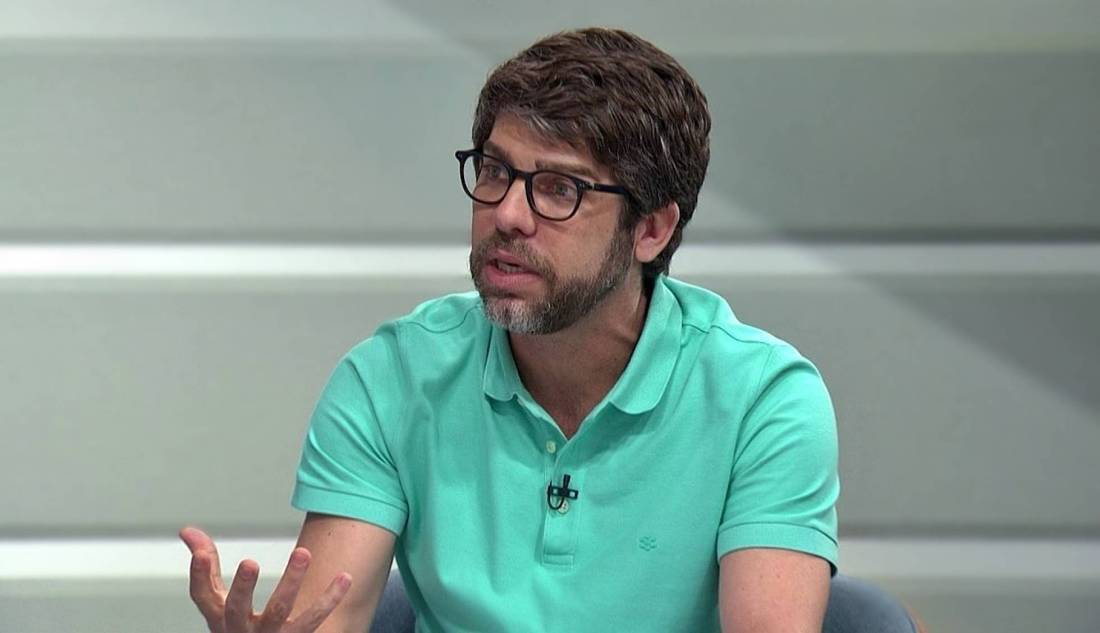
Interview | Juninho Pernambucano
In his first interview since leaving the Globo network, the former player reiterates criticisms of the media and how football helped awaken his political awareness.
Breiller Pires
Sao Paulo 5 Oct 2018
Translation by Matt O’Connor
The seven times Ligue 1 champion for Lyon, known as ‘the King’ by fans at Rio de Janeiro club Vasco de Gama has just moved to the United States. He’s living in Los Angeles after embarking upon a new adventure with his family. At 43 he’s about to become a grandfather and will be alongside his oldest daughter Giovanna for the final weeks of her pregnancy. He explains how leaving Brazil wasn’t driven by the termination of his contract with the Globo Network where he’d been working as a pundit since 2014. In an interview with EL PAÍS Juninho complains of being censored by the broadcaster when he questioned the work of the media, club correspondents in particular. “Up until the issue that led to me quitting, it would be unfair to say that I was ever impeded from saying anything” he confirms. It was at the end of April during a programme where he gave his opinion that the football club correspondents nowadays are a lot worse than they used to be. The directors of Globo’s subscription sports channel SporTV released an official declaration condemning the comments made by the former player.
As well as the reprimand read out live on air in his presence which lead to his resignation, Juninho describes how he’d faced increasing resistance from his SporTV colleagues (Read the broadcaster’s response at the end of this interview). “Massive arguments with fingers being pointed into faces and all that. All that was missing was actual physical violence.” Despite boasting a UEFA management diploma, Juninho shows no interest in working behind the scenes in football. For now, his only plans are to spend some time improving his English and continue participating in national political debates from afar.
Question: Is football in your plans for your new life abroad?
Reply: After leaving Globo I thought about what I would do. I still haven’t found my path. I don’t feel ready or want to return to football.
Q: Not even as a director?
A: I received an offer from Lyon, but I preferred to wait. I’m perfectly capable of being a director yet with the total mess Brazil is in at the moment and from what I know of the media, I wouldn’t do it now. I played football for 20 years. It was always on my mind that I couldn’t rely upon anybody once I stopped playing. To avoid having to sell my soul I only ever spent 30 per cent of what I earned as a player. I prepared for this. I invested 70 per cent of by earnings.
Q: Not even as a commentator:
A: No chance, I’ve lost all faith in the media.
Q: Because of what happened at Globo?
A: Are you recording this? Record away because I always have a lot to say. What happened was as follows: When I joined the press I was taken aback by the generalised ignorance. Football has changed a lot. Science, nutrition, psychology and performance analysis have all come in to play. Nowadays players run a lot more, they’re stronger and their reactions are quicker. There’s less space on the pitch. The media still haven’t got to grips with this evolution. They’re stuck upon nostalgia “Ah but in so and so’s day it was like this”. It’s not everybody, but the majority of journalists don’t understand the game.
Q: What do you mean by not understanding?
A: The vast majority of the media are against the evolution of football. They [the journalists] need us former players to pick up on things they can’t see. I was censored by Globo for saying that there were corrupt club correspondents up to no good. It’s the club correspondent who provides the news agenda as they cover games and training up close. When they start making dodgy side deals it fucks with the atmosphere at the club. We need to address what’s wrong at the grass roots of journalism production cycle to deal with more serious issues. It’s 2018 and I was censored on live TV. Not a single journalist came to my defence. On the contrary, I was further humiliated by Milton Neves [Presenter at Band TV] who ridiculed me on Twitter. Before that I’d received threats from fans. Mate, if I’ve been censored and threatened it means the entire press has. Nobody understood this, maybe due to ignorance or fear of losing their jobs.
Q: Had you previously been banned from saying anything by the broadcaster before you criticised the club journalists?
A: At the end of 2013 I was planning to retire from the game, I got a call from Globo asking whether I’d be available as a commentator for the 2014 World Cup. I said I’d be interested but only if I was no longer playing. So I retired and signed a one-month contract with them, I renewed it for a further two years then again for a further three years. My contract went until the end of next year. During this time it would be unfair to say I’d ever been banned from saying anything, though I’d fallen out with the three main commentators and the broadcaster’s main reporter. Massive fights, huge arguments, fingers in faces and all that in meetings. All that was missing was the physical violence. I wanted to give my opinion and they wouldn’t have it. They said I talked a lot and interrupted too much. They’d shake their heads annoyed if they thought I was talking for too long during the commentary on a game. I suffered for wanting to speak my mind even though I’d been hired to give my opinion. I criticised those deserving of criticism. Whilst Globo allowed me to work I played my part. I left with a clear conscience. I didn’t sell my soul or compromise my character.
Q: So, it wasn’t the best of atmospheres, right?
A: Things turned sour when I criticised Vinicius Junior [now of Real Madrid] after a derby game between Flamengo and Botafogo. I received death threats from Flamengo fans which I reported to the police. I expected to receive support, though received nothing from anybody at the broadcaster. From then on things went downhill. As everything was already in place to go to Russia I didn’t want to leave the guys in the lurch. I abandoned ship after the World Cup.
Q: Was your departure brought about by any disagreement?
A: The released statement to censor me, interrupting the middle of our programme on the national team came from a cowardly director, I don’t even know their name. It was the straw that broke the camel’s back. That same week I decided I no longer wanted to work for Globo and asked to leave.
Q: Do you think that sharing your political ideas in public contributed to the breakdown of the relationship with Globo?
A: I’d like to think this wasn’t the case but it probably was. During the World Cup, Globo sent out a release asking us to be careful about sharing political views on social media. I believe that when you’re at home your life’s your own. You can post what you like. Journalists that give up their social media on request of their employer are indirectly compromising their character.
Q: What was your biggest disappointment during your time in sports journalism?
A: Lack of humility amongst the journalists. They like to make fun of former players for making a grammatical error but we possess a different type of knowledge. Do you know the difference between a player and a journalist? We learn from an early age that there are those better than us. When we start playing we think: “Shit, that guy’s good isn’t he?”. We learn to respect our opponent. You may hate him, but you are never going to wish they were gone as I need him to become a better player. Journalists don’t have this ability as they’ve never been on the pitch. I don’t have the writing skills, vocabulary or education of a journalist, but I’ve got a different worldview. It was horrible seeing that arrogance up close. How can someone who has never stepped onto the pitch possess such certainty about something? I spent my whole life being criticised. They said the most ridiculous things to me when I was playing and I’m still standing. Why can’t I criticise the media?
Q: The reservations you’ve expressed go beyond the issue of the club correspondents?
A: How did the media allow Eurico Miranda [Long-serving Vasco de Gama president] to spend all that time in power? In 2015 he renewed Vasco de Gama’s television contract. When Globo pays for the broadcasting rights up front they are doing football a disservice as it doesn’t teach the directors to manage the finances. This leaves the clubs in dire straits but they like to deceive the fans by saying the solution is to change the manager, sell players, sign whoever… I can’t deceive the fans. Teams like Vasco need serious long-term work, seven to ten years to instil some kind of permanent change. And what happens? When they lose, a report goes out absolutely hammering everything rather than focussing upon the root causes. Another thing that shocked me was playing in the State Championships the commentators don’t mention the names of players from the small clubs. It’s like the big team playing against a ghost team. When I went to commentate on a Volta Redonda [Brazilian 3rd division club] game, for example, I’d call their press officer to get information on all the players, the tactical set up of the manager. If someone is playing well I need to know his name to praise him. Or criticise him if he has a bad game. These shitty situations I witnessed really upset me.
Q: Did you find yourself conflicted internally having to work at a place so different from your personal views?
A: You can’t pay through the roof for the championship if you don’t protect the sporting spectacle. That’s what I fought for at Globo. I tried to show them that a better fixture schedule would improve their product. There are games Wednesday to Sunday in Brazil. Shit. It’s too much for everyone. It’s all to do with money. Players aren’t machines. To play well you need rest and recuperation. You can’t have a Brazilian championship game during the FIFA international calendar. The media’s lack of awareness on these issues shocked me. Everyone’s evolved. Why can’t the media move on? Analysis is basically to choose the hero and the villain. This is dangerous. The message this sends to society is that you’re either a star or a piece of shit. Why do Brazilian players lose their nerve at times? Because they know they’ll be crucified if they lose. It creates this fear of losing that influences performance. Fans adopt this logic, they want to know who they can blame.
“I’m disgusted when I see right-wing players and former players. We started from the bottom, we grew up with the masses. How can we be on that side? Brother, you’re really going to support Bolsonaro?”
Q: You once said that the Flamengo full-back Renê was only criticised because he was from the Northeast, an observation that had significant repercussions.
A: When you charge 180 Reales [50 dollars] a ticket it’s a certain type of fan that goes to the stadium. Flamengo games these days are for people who live in the wealthy Rio neighbourhoods of the Zona Sul and Barra de Tijuca. I’m in the right to be talking about Renê. Who are the players that the Flamengo fans give the most grief? Muralha with his different haircut. Marcio Araujo, black. Rodinei who they disgracefully call “fat pig”. Pará and Renê who came from the North and Northeast regions. As a commentator I noticed that the fans had a vendetta against Renê, but on the pitch I didn’t observe bad performances from him. On the contrary, he’s one of the best marking full backs in Brazil. And teams don’t lose just because of one player. Other players not performing were analysed differently. This is part of our elitist culture. The next on the list will be Vitinho, who’s also black. Those unaware should pay attention. They only talk about how much he earns and how much he cost, no one considers that he’s come from Russia and will need time to readapt. “ah but he gets paid for that”. Fuck, he’s human. Do you know where he came from? Do you know what his childhood was like, everything he went through to get to where he is?
Q: At the time Flamengo released a statement declaring their fans were not racist.
A: Of course the Flamengo fans aren’t racist. But the element of the fans paying 180 reales for a ticket is racist. The same element exists at Vasco and the other big clubs. How’s it possible for fans of a club that accept black people, where the workers built their own stadium, to be racist? They support a people’s club. How can they then be fascist? It’s a disease. They only get on the backs of the same players. They’ll fall in love with a player with limited ability but a more appealing physical appearance. I came from the Northeast, I know what it’s like.
Q: Did you get a lot of bigoted criticism?
A: Mate, everyone gets it. Footballers hear a lot of bigoted stuff both inside and outside the stadiums even from the media. They humiliate players rather than criticise technical ability. They need to draw the line somewhere with the criticism. The guys have got families, their children go to school and hear all kinds of rubbish. The pressure is huge. Alex de Souza [former Fenerbahce player] describes how his dad fell ill after hearing so much criticism from Galvão Bueno [Brazil’s main commentator] on the TV. It happens repeatedly.
Q: Do you perceive class discrimination in the media criticism of the players?
Discrimination exists but there’s also an interest in alienating the player. The truth is the media oppress the player. They want him to be viewed as an ignorant reprobate. I’m not graduated in anything. But I was born in Recife, I came to Rio aged 19 and lived eight years in France, two in Qatar and a further six months in the United States. I’ve visited over 40 countries playing football. Don’t you think life has taught me other things? Do you know why gay players won’t come out? Because they’re afraid of the repercussions in the media. Fear of being humiliated. Another thing I strongly oppose is pitch side interviews. Players need to get in the dressing room, take a shower and wind down. Straight after the match they’re not in full sobriety. Emotions are running high and players will say things after 90 minutes of intense effort, it can be taken out of context or not be what they really wanted to say.
Q: Why do so few players take a political stance?
A: A player’s career is short. Football demands such dedication that you end up alienating yourself. I can understand the current players preferring to stay out of it. But the former players with a good quality of life that don’t speak out about the state our country, that’s unacceptable.
Q: Is that why you began to position yourself politically after you hung up your boots?
A: My political awareness and responsibility as a citizen developed a great deal more after I stopped playing. Previously, when I’d see in the news that a politician had died I’d say to myself “one less crook”. I learnt things through reading, travelling the world observing how things work to then give my opinion. Of course, the young player who isn’t friends with the journalists and has nobody to protect them, will be crucified if they were to speak out. They avoid wasting energy on this and focus on their livelihood.
Q: Did your time in France contribute to the development of your political conscientiousness?
A: What it awoke in me was the humanistic side of the French. I thought Brazilians were compassionate, I’d say that to everyone. But man, what a lie. The French are really compassionate. There are the extremists, that racist element that hates Muslims. But the majority of French people are humanly evolved. I saw young players receive offers to double their wages and turn them down as they didn’t want to leave their hometown. I couldn’t understand it. I’d just think about the money. That was my mentality. I also saw players coming from countries a lot poorer than Brazil, in a state of civil war, and they were more educated and had a lot more respect for others than we do. We are really greedy. I only know this as I lived outside Brazil. Football taught me to see the world. Football saved my life.
Q: Are you referring to Brazilian greed in general?
A: Look when you’ve got Money to spend you profit from the chaotic situation in the country with the weakened currency. I played for a decade outside of Brazil getting paid in foreign currency, I only spent 30% of what I earned, all above board, right? The wealth I’ve invested abroad has only increased in value. How can you be happy with a system like this when there are still children dying of hunger in the country? It’s unfair! The richest class need sensibility. All us Brazilians like money, but when greed grows excessively the gap for the poorest is huge and we have an explosion of violence. Wealth can’t only be in the hands of the few. It’s selfish. And it all begins at the starting line. I fight for opportunities not to be the preserve of the already privileged. How can we talk about meritocracy? Meritocracy exists in sport. Yet in a country like Brazil we can’t talk about meritocracy. A minority has a huge head start and then demands that those behind them make something of themselves. Such a race will never be fair.
Q: Do you recognise how privileged you are within this system?
A: I was earning 15 thousand dollars a month at Globo, working two days a week from an already comfortable position. I could keep my mouth shut and enjoy life as I only benefit from the system. But what kind of happiness is that? Brazilians have lost their self esteem, heads are down on the street. There’s young people, 20, 30 years old still living with their parents spending all day in front of the TV, a disillusioned generation. This isn’t the country I want for my daughters.
Q:. Has living in a house with four women influenced your worldview?
A: I acknowledge that I’m still a machista in deconstruction, because that’s how I was brought up. I recognise this to be able to evolve. I learn something every day from my daughters, witnessing women’s struggle for equal rights in Brazil.
“What people hate about Lula is his appearance, origins, accent, history and popularity”
Q:. Like some other former players are you planning to enter into politics?
A: I don’t know yet. I’m waiting for life to show me what I should do. I’ve never been involved with any politician, never campaigned for anyone. I met Lula in person when Brazil played against Haiti in 2004. He went to the game, thanked us all and wrote each of us a letter. It’s the only time I’ve met him. I have a lot of admiration for him. No one can take away what he did for this country. Lula’s a 72-year old gentleman being crucified. Why do people hate Lula? They hate his appearance, origins, accent, history and popularity. If you were to perform a hatred experiment in the street with a figure of Lula next to one of Aecio Neves [presidential candidate in 2014] it would all be piled upon Lula. There’s no comparison. The elite exert a psychological hold on the people. Their domestic staff wear white in their homes, it’s a throwback to slavery. As I’m well off, I lived amongst the elite, I lived in a condominium for rich people. I’d see fathers passing on their hatred to their sons, it’s surreal.
Q: How do you see the Brazilian political situation in these last few years?
A: Our democracy is very young, the basics would be to understand that all votes are equal. Black, white, poor, rich: no vote is more important than another. The problem is that with a left-wing government in power for so long, the desperation for a return to power blinded some people. How many do we need to remove Dilma? Aécio, Eduardo Cunha, Temer and… the media for God’s sake! They tore up our votes and introduced this terror. They should have challenged Dilma at the ballot box! However bad a state the country was in, we wouldn’t have got into this situation where an extremist is a potential president. You can put this in writing the mass media will support Bolsonaro if he gets into the second round of voting.
Q: Some people from the word of football as well?
A: Many Brazilians ignore the fact that others were tortured and murdered during the dictatorship. It’s tragic to see people calling for military intervention. The armed forces exist to defend the nation, protect the borders, not to kill Brazilians in the favela. They weren’t trained for this. People say I’m an apologist for criminals. But we’ve got to put an end to this idea that all crime is the same. Murder is one thing robbery another. You can’t put an 18-year old in prison for theft. They just join the youth team for crime. When they get out they want to take their vengeance upon society. That’s why I’m disgusted when I see right-wing players and former players. We started from the bottom, we grew up with the masses. How can we be on that side? Brother, you’re really going to support Bolsonaro?
Q: Given the passion involved, the world of football is a fertile ground for intolerance. How did you shield yourself from all this, particularly when playing abroad?
A: One of my daughters was born in Recife, the other two in Lyon. My granddaughter is going to be North-eastern and American of Chinese descent. You can’t say there isn’t diversity in my family. I’m a citizen of the world. I can’t be intolerant about differences. Though I make an exception for extremists. Someone who believes in “human races” and preaches hatred doesn’t deserve democracy.
Q: Do you notice any parallels between football and politics?
A: Football is as lost as the rest of Brazil. The difference is that there’s still the talent in football so it takes less time to crawl out of the hole.
GLOBO DENIES CENSORSHIP
Contacted for this article. The Globo network’s communication department produced the following response to Juninho’s interview:
As a member of staff at Globo Sport, Juninho Pernambucano was always treated with professionalism and respect and was never censored in any way. The official declaration quoted in his interview with EL PAÍS and released by Globo makes it very clear that Juninho had the right to his opinion and would continue to do so. The text merely made it clear that the SporTV channel did not agree with the criticisms, accusations and generalisations made about a group of professionals which included his own work colleagues. And it reinforced the confidence in over 30 club correspondents who work for the Globo Group. The declaration was read live on air in front of Juninho which does not represent the “cowardice” he describes.
Regarding a further episode cited in the interview, Juninho describes how he received threats from Flamengo fans after an argument on social networking sites. This is why he asked not to commentate on the final of the Rio State Championship as scheduled. Out of respect for the professional we immediately agreed to his request and removed him from the commentary team for that match.
PIRES, Breiller (2018). Entrevista | Juninho Pernambucano: “Sofri censura ao vivo na TV. Nenhum Jornalista me defendeu” El País Esportes 5th October 2018 Available at <https://brasil.elpais.com/brasil/2018/09/19/deportes/1537394219_927623.html>
 Juninho Pernambucano's explosive interview for El Pais Brasil